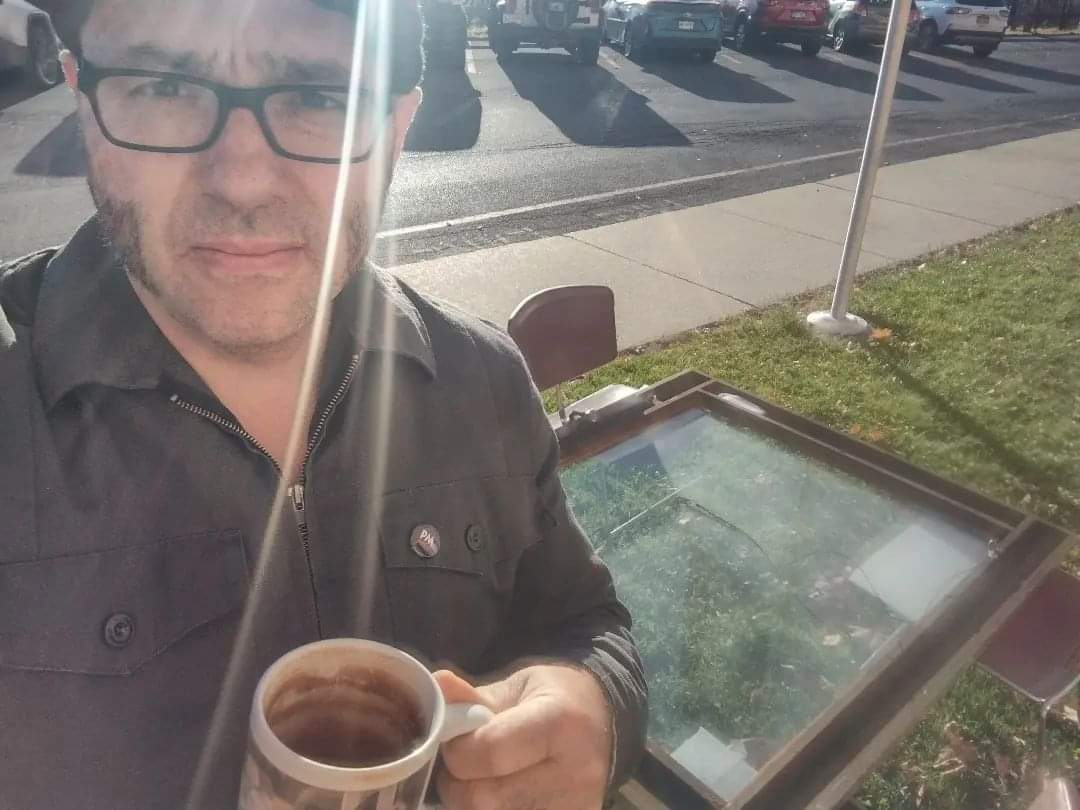
I went to the Massachusetts coast with my family. We watched whales off the coast of Gloucester, wandered around Rockport, and then spent Sunday in Boston playing on the Common, eating at Durgin Park, and grabbing pastry at the other great North End bakery.
I read this interview with a political scientist named David Faris, who argues that after a long string of disappointing electoral and policy defeats, the democrats need to shift from a war of policy ideas to a war of procedure, which he argues is what the Republicans have been doing since the 1990s. Two of the major policies he mentions are breaking California up into several smaller states, and granting statehood to Puerto Rico and D.C. This would essentially pack the Senate and Congress with reliably Democratic votes for long enough to pass progressive legislation and install a more reliably progressive court system. It breaks precident, but not any actual rules. Corey Robin made much the same argument on Monday, arguing that we have to argue that “The principle to mount against that scandal of democracy is simple: one person, one vote. In a democracy, no one’s vote should count for more than any other person’s vote.” Doing so would require a radical re-shifting of the three anti-democratic pillars of the constitution: the Supreme Court, the Senate, and the Electoral College.
I watched Mohawk, a historical supernatural movie set in colonial New York, and featuring Indigenous protagonists. The movie follows a Haudenosaunee Mohawk man and woman and their English lover as they try to escape from a sadistic band of American soldiers hunting them through forested Iroquoia. Given that plot, it would be easy for this movie to get b-movie silly, but the director, Ted Geoghegan, frequently slowed things down and lingers over faces, trees, and landscapes, giving the movie an almost dream-like and contemplative quality. There is a supernatural and horrific element, but the real horror is colonialism, and the violence that it required and requires. The production design suggests a low budget, but within those constraints it was really well made and well acted, especially its Haudenosaunee/Iroquois and other Indigenousactors. The script was co-written by none other than Grady Hendrix, author of Horrorstor (a horror novel designed like an Ikea catalog) and My Best Friend’s Exorcism, both of which are wonderful and worth your time.
I read this strange story by Ryan Lizza about the Nunes family, Iowa, dairy farming, and immigration. It’s a complicated and bizarre story, made more bizarre by Lizza’s role in it. Essentially, the vitriolically anti-immigrant and pro-Trump congressman Devin Nunes’s family (and primary campaign staff) run a dairy farm in Sibley, Iowa that is likely completely staffed by undocumented immigrants. The story involves Wells Blue Bunny Ice Cream (“The Flavor of the Heartland”!), anonymous surveillance, ICE, pig blood rendering, and the ubiquity of White SUVs. Honestly rivetting and thought provoking.
I listened to Double Negative, the new album by Low. Low has been a band for 25 years(!) and though their style has changed periodically, the constant has been the haunting and gorgeous harmonies of Alan Sparkhawk and Mimi Parker. On Double Negative, that constant sound has fallen into a dark recess of modulation, audio processing, and gated distortion. The resulting sound is eerie and strange, without only the occasional surfacing of human voices to give any certainty. I’m obsessed with the record, particularly as our hot summer here in Oneonta moves into a crisp and cloudy Fall. [youtube https://www.youtube.com/watch?v=jvEozu4Obfs&w=560&h=315]
I tried (and mostly failed) not to watch the slow moving car-wreck of American jurisprudence.
I watched The Endless, a strange and creepy movie from the makers of Resolution, another strange and creepy movie. The basic plot is that two brothers who escaped from a UFO death cult when they were teenagers discover that the cult’s compound and membership are still alive and active. They decide to visit, partly out of boredome and dissatisfaction with their new lives, and partly out of curiousity as to why everyone is still where they left them. The gradual and ultimately only partial unveiling of the mystery, makes this the kind of ambiguous, well-made sci-fi horror movie that is both really exciting to me, and exceedingly rare.
By contrast, there is something distinct about social sadism in modern capitalism, and in neoliberalism in particular. This is surplus cruelty in a specific sense, sadism supererogatory in relation to the – conjunctural, contested – ‘functional’ requirements of the system, a social formation characterised by the hedged, reversible, embattled but well-documented historical shift away from social punishment as overt– the qualification is crucial – spectacular, sanctioned, performative cruelty.
and perhaps more ambiguously, but hopefully
We build against sadism. We build to experience the joy of its every fleeting defeat. Hoping for more joy, for longer, each time, longer and stronger; until, perhaps, we hope, for yet more; and you can’t say it won’t ever happen, that the ground won’t shift, that it won’t one day be the sadisms that are embattled, the sadisms that are fleeting, on a new substratum of something else, newly foundational, that the sadisms won’t diminish or be defeated, that those for whom they are machinery of rule won’t be done.
I attended my father in law’s funeral. He was a global citizen, while at the same time a devoted and proud Torontonian. He traveled widely, and with his family lived in Grenada, and Saudi Arabia, using both locations as stepping stones to travel further. But he was born in Toronto, and died there, and talked about the city to me and others with an enthusiastic pride of someone who truly loved it. He read widely, and could speak with great eloquence about history (particularly Canadian and Ukranaian), international politics, literature, music, and art. He had a PhD in biology, and his passion was raising plants and trees, which he did masterfully both in the family’s home garden, and in a farm in Bancroft, Ontario that he reforested from barren scrub. He also raised one hell of a daughter, and was a thoughtful and generous grandad to my son. Those are his greatest gifts as far as I’m concerned. So long, Oleh. Rest in Peace.
I along with members of Hartwick College’s student Senate, helped register Hartwick students to vote.Technically it was last week, but for reasons that should be obvious, I didn’t really have time to take stock until this week.
I grabbed an album by the horribly named band “Diarrhea Planet”, entitled “I’m rich Beyond your Wildest Dreams”. Yeah, their name is terrible, but the music is righteous and fist pumping and beautiful. The song that converted me was “Kids”, a chiming, soaring guitar anthem about being young and the terror and sadness of growing up. [youtube https://www.youtube.com/watch?v=Yo6TcHMRN3k&w=560&h=315]
While watching the absolute horror-show of the courageous testimony of Christine Blasey Ford, I felt so disgusted, and decided to give money to RAINN (the Rape, Abuse, Incest National network). Their hotline is always open, and I wanted to give them money to keep it that way.
I read Natalie Shure’s article about the ways in which the Federalist Society’s agenda (they’re the group that picked Brent Kavanaugh as a Supreme Court Nominee) serves to reinforce patriarchy and violence against women. Essentially, women’s equality demands a socialization of the kinds of labor for which women are generally not compensated (particularly around childcare and family work) and so there is an easy overlap between wealth inequality and gender inequality.
Harry Matthews, Hartwick’s Director of Intercultural Affairs, shows students from the Black Student Alliance around the Black Lives at Hartwick Then and Now ExhibitI attended the Yager Museum’s fall reception for new exhibits. I’m really proud of all the exhibits we’ve put up, and especially Black Lives at Hartwick Then and Now, which I co-curated along with Harry Matthews and Shelley Wallace.
I finished Rebecca Roanhorse’s debut novel Trail of Lightning. Roanhorse is an award-winningOhkay Owingeh (pueblo) author and sets her novel in a post-climate change Dinetah (the Navajo homeland), walled off from the chaos of a world that has mostly drowned. This event also re-charged the supernatural forces of the Dine/Navajo, and the world is thus populated with monsters, gods, and people with astonishing powers based on their clan membership. Roanhorse wrote a wonderful essay on Indigenous Futurism which is well worth your time for its re-configuring of some standard sci-fi tropes:
the landing of Columbus is no longer the discovery of the New World celebrated in children’s songs and on national holidays, but the start of an earth-shattering zombie apocalypse
I watched Frances Ha, the 2012 movie directed by Noah Bambach and written by Baumbach and Greta Gerwig (who also stars as the titular character). I had really mixed feelings about it, the same way that I felt about the characters in Martin Amis’s legendary 80s novel Money. Both works feature entitled, relatively priveleged characters whose bad decisions and poor relationships are held up for both criticism and humor. Unlike Amis’s book, Frances and her friends actions mostly harm themselves, not other people. And because Gerwig is frankly magical and charming as the lost and rootless Frances, it is easy to find relatable and human moments in the movie, despite the smugness and entitlement that pervades it.
I heard Marc Ribot and Tom Waits' version of the Italian anti-fascist song “Bella Ciao.” I’m kind of in awe of it, actually[youtube https://www.youtube.com/watch?v=50GvkAO0OIg&w=560&h=315]
I read the amazing Adam Serwer’s pessimistic take on what is at stake in the Supreme Court. Serwer has an amazingly broad grasp of US history and politics, and he focuses his attention on the late 19th century Supreme court which he refers to as the Redemption Court. This court did so much damage by allowing or whole-heartedly endorsing the most violentandrepressiveaspects of Jim Crow segregation. Serwer points out that courts have never been ideologically neutral, but have often been pushed by the mood of the country, though perhaps that is no longer the case:
The Redemption Court was arguably constrained by the broad public consensus among white people of all political stripes that black people were inferior and undeserving of full citizenship, a consensus that hobbled enforcement of the Civil Rights Act of 1875 even before it was struck down. The new Roberts Court will pursue its ideological agenda even in the face of majoritarian opposition.
I discovered The Weird Fiction Review, a website set up by Ann and Jeff Vandermeer, to, in their words provide “Reviews, interviews, short essays, comics, and occasional fiction…on all facets of the Weird”. They edited the enormous tome that I’m currently slogging through, and the site has a section called 101 Weird Writers that provides critical essays of each author in that collection. As if I didn’t have enough to read already…
The first page of our syllabusI started teaching a new class, in Hartwick’s Museum Studies program entitled “Collectors and Collecting.” It’s an interdisciplinary First Year Seminar, with the goal of using collecting, as a cultural and historical practice, to get students to better understand the world they’re in and their place in it. So far, it’s been a ton of fun, as we’ve looked at Coffee Lids, “Mantiques”, and WWII shrapnel.
I read with great interest this history of some of the first women to work at Rollingstone magazine in the 1960s. Rollingstone was a hub for high quality alternative journalism in the 1960s, with guys like Hunter S. Thompson, Joe Esterhaus, and Cameron Crowe cutting their teeth there. And yet, as with many Famous Male Auteurs, this article makes clear that they benefited from a sexist environment, and were materially aided by the mostly unsung work of women.
Every Confederate flag in the North is a confession. Each one gives away the entire charade. How can it possibly be about heritage or the other tired euphemisms its Southern defenders trot out?…Every Confederate flag flown outside the slave states is as close as we will get to an admission that the flag represents whiteness, not Southernness.
I listened to the newest episode of the amazing podcast The Memory Palace. Walter Knott speaking at the dedication of “Independence Hall”, 1966. This week’s episode was focused on the origins of Knott’s Berry Farm, an amusement park in Orange County that was founded by a farmer named Walter Knott. I knew of Knott’s Berry Farm from a throwaway line in the musical Smile, of which I was a cast member in High School. I had no idea that Knott was an arch-conservative, and focused both the park and his political activism around conservative causes. He built a replica of Philadelphia’s Independence Hall, supposedly to push people away from socialism, anti-war agitation, and civil rights.
I went to Toronto. My wife is from there, and we got in a visit to family and her friends before the furor of the fall semester. I also took a jaunt out to the Reservation of The Mississaugas of the New Credit First Nation, where I used to work, to visit friends and colleagues.
I finished reading Volume 8 of Brian K. Vaughn and Fiona Staples' massive and enchanting graphic novel Saga. Alana and Marko and their baby at the start of the seriesYou should be reading this series, if you’re not. The summary is that there are two planets at war with each other, and they’ve roped in most of the rest of the planets in their galaxy to fight with (or for) them. A guard from one planet falls in love with a captured soldier from the other, and they have a baby together. The story is what happens as they try to make a thriving family in the face of the chaos and destruction around them. The storytelling is brilliant and gripping and the art is absolutely breathtaking. I haven’t been as emotionally invested in a comic book series since I read The Sandman when I was a teenager.
The Museum hosted Hartwick’s Matriculation Ceremony for new students. Over 800 people consisting of incoming Freshman and their families came through the Museum and signed the Matriculation register with the college President. It was a long but enjoyable day. Congrats, class of 2022!
I finished reading Mike Davis’s newest collection “Old Gods, New Enigma’s: Marx’s lost theory”. Davis is a wonderfully readable radical historian of labor, urbanism, and ecology (or in the case of “City of Quartz” his astonishing history of Los Angeles, all three) and he brings to bear his vast knowledge on his first published commentary on Marx. It’s worth the price of admission alone for his incredibly funny introduction in which he lays out all the times he’s tried to read Marx and failed. There are four essays, all of which are insightful in different ways, but what’s stuck with me the most is his quote from the last essay on global warming and urbanism:
I learned that I need to stop shopping at Dollar General, which has outpaced Wal-mart as the most insidious destroyer of rural communities, with more stores than McDonald’s restaurants.
I poured over some beautiful maps of Brooklyn that show the locations of indigenous Lenni Lenape trails. Not surprisingly, many of these trails became the basis for major thoroughfares and roads. As I’ve educated myself about the Indigenous history of North America, it’s always surprising to me (though it really shouldn’t be) just how many putatively “American” (read European or English) places are actually Indigenous places that were papered over by colonization and material efforts to actively forget it.
I read this absolutely bonkers intellectual and social biography of Charles Murray, one of the co-authors of the Bell Curve and ongoing proponent of the thoroughly debunked belief in correlations between intelligence and race. Murray began his work as part of the US’s counterinsurgency efforts in Thailand in the 1960s, and much of his subsequent work built on this formative experience. He later grafted his anti-government beliefs onto ideologically minded (and funded) racist IQ science, and has spent the next 30 years as a putative teller of uncomfortable truths that are really just self-fulfilling justifications of existing inequality. Anthropologists did little work to publicly counter Murray in the 1980s and 1990s, though some are taking him on now.
I read with great relish Erik Loomis’s call for a Corporate Accountability act that takes aim at the limited array of progressive and leftist activism around trade issues. Loomis’s argument is basically that the neo-liberal consensus between the center-left and center-right in the 1980s and 90s has left us bereft of alternatives for what a just, fair, and healthy global trade would look like. Also, his upcoming book “A history of American in Ten Strikes” looks like the kind of saucy labor history I tend to love.
I welcomed a Cayuga faith keeper and his partner to the Museum where I work. Ostensibly I was there to give them a tour and help them figure out a more precise location for Oquaga, a large Iroquois settlement and refugee community in what is now Southern New York. But in practice, he was the one who gave me a tour, and I just opened doors! The group of us had long and interesting conversations about Iroquois history, wampum, and Indigenous representation in White culture. I’m hoping to have him back sometime in the future to talk to students and faculty!
 I watched
  I attended my father in law’s funeral
 Harry Matthews, Hartwick’s Director of Intercultural Affairs, shows students from the Black Student Alliance around the Black Lives at Hartwick Then and Now ExhibitI attended the
  I collect
 .jpg)
 My son, playing on the beaches of Lake Ontario, with the Toronto skyline in the distance.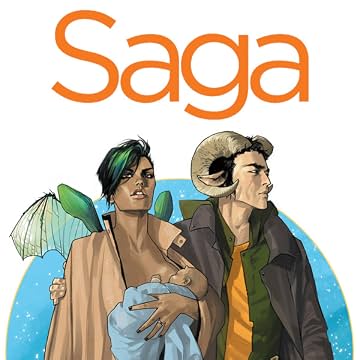
 I read with great relish