Recent Posts (page 35 / 39)

by Quentin Lewis

Quentin's Weeknotes 6/15/19-6/21/19

This Week:

You are bereft of hips, as also of arms, hands and feet – try bending your neck to your feet! Your smell is awful; you make people throw-up

by Quentin Lewis

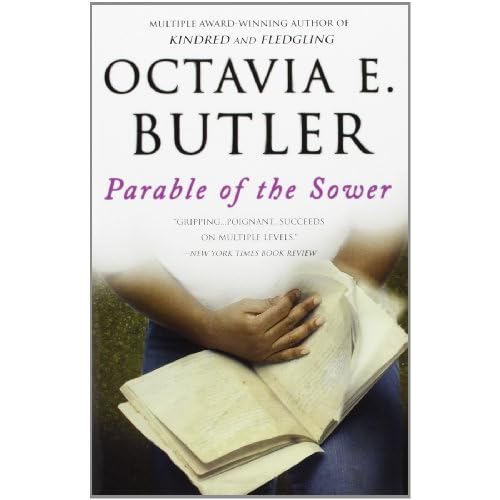
Book Notes: The Subprimes by Karl Taro Greenfield

The Subprimes by Karl Taro Greenfield

A dystopian satire, written a few years ago, whose closeness to (as well as divergence from) the world we are currently in makes it even more unsettling.

The Subprimes of the title are people whose credit scores are sub-prime (and folks with not that long memories will recall the use of this term in the finance market to describe the volatile loans that led us to the 2008 crash). In 21st century America, they are social pariahs, as every aspect of citizenship and daily life are governed by credit scores (housing, employment, education). Those whose scores are too low are forced into vagrancy, setting up temporary camps called Ryanvilles (named after former House Speaker, weightlifting enthusiast, and champion of government deregulation Paul Ryan). The book intertwines a number of storylines, including several Subprime families, a washed-up reporter whose son is enrolled in an increasingly regimented and privatized school system, the wife of a energy stock trader under inditement for securities fraud, and a mysterious woman of color who tries to build political and social alternatives to all of this.

Along the way there are hard-right evangelical megachurch pastor/politicians, ultra-wealthy energy families manipulating politics towards their own ends, environmental castastrophe (the book opens with Whales beaching themselves en masse, and periodically references unending prairie wildfires), double-speak regressive politics (e.g. “the Clear Skies Act” which mandates environmental deregulation), economic exploitation of marginalized people, and the militarization of everyday life.

The Subprimes highlights the danger and disorientation of our world with both incisive humor and abject terror. The book opens with a depressing depiction of a Ryanville that is later destroyed by a police raid, in a passage both horrifying and enraging. There are also some wonderful puns and wordplay to be found throughout–the wealthy sisters who own most of America’s energy concerns are named the “Peppers”, presumably in references to the Koch (Coke) brothers.

This is a satire, which means its about ideas and abstractions, not characters and emotions. Most of the characters are pretty one-dimensional–the philandering stock-trader husband is astonishingly simple-minded for someone who scammed hundreds of people. Likewise, the mysterious revolutionary Sargham is almost literally divine, and the ending of the book casts a miraculous shadow over her political beliefs and hard organizing work. There were passages and sections that I found to be pretty abyssmally written, and that let go of subtlety in favor of a rhetorical beating.

And the end of the book is somewhat upbeat, but in a way that felt literally miraculous and belies the complicated ecological, economic, and political problems that it outlined. It initially feels good to see powerless people stand up to the powerful, but offered little beyond that good feeling as to whether such a stand would be ultimately succesful in any other narrative or historical moment.

All together, this was a harrowing read, given our current circumstances. It was definitely entertaining, especially in the “spot the pseudonym” sort of way, and it tells a story of triumph over evil. But I’m not sure that I actually enjoyed it, given how woodenly it was written, and given that the problems it sketches are all around us, frighteningly visible and visceral, I found its magical ending even more despairing.

by Quentin Lewis

Quentin's Weeknotes 6/8/19-6/14/19

This week:

  • I listened to this two part interview with Steve Albini and Ian Mackaye. It was a phenomenally rich conversation, with the first part being basically historical, about their respective histories in punk rock and independent music, and the second part being more philosophical, with their thoughts about the internet, criticism, and community. What came through for me is that they are great friends, mutually admiring, and that part of what brings them together is their fierce commitment to humanistic and ethical art-making. What was also neat was to hear their points of difference, with Albini being more analytical and empiricist and Mackaye being more direct and rationalist.
  • I finished reading Grady Hendrix’ Paperbacks from Hell: The Twisted History of ’70s and ’80s Horror fiction. It was a fun, easy read, and made so by the amazing covers of these novels, reprinted theiein, and by Hendrix’s humorous ironic prose, filled both with genuine love and snark for the outrageous books that made up the horror boom of the late 20th century.
by Quentin Lewis

Quentin's Weeknotes 6/1/19-6/7/19

This Week:

  • I listened to a new podcast, entitled This Land. Hosted by Indigenous (Cherokee) Activist and author Rebecca Nagle, it chronicles the background of an upcoming supreme court case that will determine whether half of Oklahoma is Tribal land. The basis is a murder and the question of federal jurisdiction, but the heart of the issue is treaty law, and the extent to which Indigenous groups are sovereign nations whose rights under treaty must be acknowledged. Check it out!
  • I helped my folks get the website of their antique shop looking shipshape. Czech Village Antiques is a great, multi-dealer store in the heart of Czech Village in Cedar Rapids Iowa. Stop by if you’re in town.
  • I finished reading the third volume of Nnedi Okorofor’s Binti trilogy. The easiest (but sort of misleading) tagline would be “African Harry Potter in Space”, but it’s really a thoughtful meditation on tradition and change, intercultural agreement and strife, and building community. Also, there are Jellyfish Aliens and flying interplanetary fish.
  • I attended the New York Archives Conference and gave a co-authored paper (with Shelley Wallace) on archives and archaeology. I wish I coud’ve stayed longer as it was quite an interesting group of folks.
by Quentin Lewis

Quentin's Weeknotes 5/25/19-5/31/19

This Week:

  • For some reason I kept thinking about Joshua Casteel. I have a copy of Letters from Abu Ghraib, which he wrote during his time as an interrogator (after the torture scandal broke). I wound myself wishing someone had written out his full story, and then lo, and behold, discovered that someone had. The Priest of Abu Ghraib is absolutely worth your time, as is “Letters from Abu Ghraib,” which I was delighted to learn is out in a second edition.
  • I watched the Perfection. I wanted to like it. There’s a really excellent feminist revenge movie lurking inside this poorly written and incoherently goofy film (Alison Williams is attacked multiple times in the movie and nobody notices she was wearing a wig the whole time?).
  • My family spent a bunch of time getting our yard and garden shipshape. We are doing some major replanting and re-organizing this year, and it was quite a chore. I used a stump-grinder for the first time, which was one of the most simultaneously tiring and satisfying experiences I’ve ever had with machinery.
by Quentin Lewis

Quentin's Weeknotes 5/18/19-5/24/19

This week (well, actually last week):

The capitalists won’t like it, but they didn’t like the weekend either. The weekend was won by a powerful movement of working people asserting that the time of their lives should belong to them, not to those who would wring them dry for profit.

  • I finalized my notes from my recently-completed Collections Management class and organized them to teach it again, better, next year. I also cleaned out the old paint room at the Yager Museum, which was delightfully satisfying.
by Quentin Lewis

Quentin's Weeknotes 5/11/19-5/17/19

This Week:

  • I finished watching Under the Skin, also known as the Scarlet Johansen alien movie. It was weird and sort of poetic, but also with not much beyond what’s on the surface (ironic, given the title).  via GIPHY
  • I finished teaching my Collections Management class. This semester, my students did projects where they created a concordance between old and new numbering systems, researched the provenance of some mysterious prints, and prepared a selection of objects to go on exhibit, respectively. Along the way we learned about basic artifact handling, dipped our toes into Museum database management, washed and waxed a piece of outdoor sculpture, and watched a clip from an important piece of Museum film scholarship.
  • I celebrated my son’s sixth birthday. Six was a good year for me, filled with new friends, new things to learn, and new experiences, and I hope it will be for him too.
by Quentin Lewis

Quentin's Weeknotes 5/4/19-5/10/19

This Week:

“Trumpism’s pitch to young white men is thus a stirringly amoral sort of syllogism: we can’t give you anything material, because we stole it all and are hoarding it, but we can create a world in which you can regularly act on your worst impulses and get away with it. Some city kids are coming to town; here’s a way to racially mock them that won’t get us in trouble.”

This is essentially a bite-sized and modern version of David Roediger’s argument in “The Wages of Whiteness”, itself drawn from W.E.B. Du Bois’s assertion of a “psychological wage” given to white workers after the Civil War, to offset their lack of material gains (and to keep them from forming a multi-racial labor party). History repeats itself. 

by Quentin Lewis

Quentin's Weeknotes 4/27/19-5/3/19

This Week:

by Quentin Lewis

Quentin's Weeknotes 4/20/19-4/26/19

This week: