Recent Posts (page 32 / 40)

by Quentin Lewis

Quentin's Weeknotes 9/5/20-9/12/20

via GIPHY

 Haven’t done these in a while, but it feels like time to come back. I find it comforting to take stock of my week, particularly as there is simultaneously so much happening, while at the same time, every day is exactly the same.

This Week:


by Quentin Lewis

Book Notes: You Should Come With Me Now by M. John Harrison

Finished 8/28/20


A fantastic collection by a science/speculative fiction master.


M. John Harrison is a brave writer. That’s the best way I can describe him, though it probably sounds trite. He writes out of a tradition of science fiction and fantasy (indeed, he was present at one of its Big Bangs–New Worlds magazine), but refuses genre fiction’s longstanding commitment to foregrounding plot. Instead, Harrison is interested (obsessed?) with how people live with discomfort, or rather, make discomfort comfortable enough that they barely notice it. Sometimes that discomfort is otherworldy, and sometimes it is entirely mundane or even unplaceable. This is a daring and difficult thing to do, certainly to do well. It also takes him to some places that are both familiar for science fiction and entirely alien to it. For one thing, his characters are rich and weary, not the dark heroes or brilliant explorers of most science fiction. You can read their entire lives in the brief sentences he writes about them. For another, alienation and chilly modernity are lurking in the background of everything Harrison writes about. Human connection, friendship and solidarity are fleeting or nonexistent to Harrison’s protagonists and secondary characters. Any outrageous, supernatural, or impossible forces they encounter end up being just an exterior barrier, a pressure acting on them.

Harrison’s prose is striking and subtle. Every sentence delights and begs more questions, as Harrison uses ambiguity and uncertainty as modes of storytelling. He’s comfortable with uncertainty, or at least with leaving his readers uncertain.  Sometimes, getting caught in the trap of genre, I found myself wondering whether I had missed the fantastical element, and would read stories again looking for a hidden ghost or alien or something else. But this says less about Harrison’s place in genre fiction and more about my need for the comfortable dictates of genre fiction.

 This collection mixes some short stories with very short flash fiction–a paragraph or two. Like most short story collections, there were stories that grabbed me and others that didn’t, so your mileage may vary. Here are few that stuck with me:

“In Autotelia” is an absurdly simple story–a minor bureaucrat goes to work in the eponymous city which is perhaps metaphysically adjacent to London, spends a mundane day on the job, and then returns home to London. For other writers, such a story would likely take place off scene, replaced with more traditional investigations of this extradimensional city, populated by people who may or may not be human. But for Harrison, the city of Autotelia becomes a backdrop for exploring questions of immigration, neoliberal accounting, gender politics, and alienation. This sits with the best science fiction tradition of the future or the otherworldly holding up a mirror to us. 

 “Entertaining Angels Unawares” is a story about two men who repair the tower of a rural chapel. As the men work, they talk about their dreams, which grow increasingly violent and apocalyptic. The ending is strange and ambiguous, with the narrator abandoning his work partner to climb the church, and wander the gravestones of the churchyard. It’s unclear whether he’s possessed, crazy, or inspired by the murderous dreams of his partner.

“The Crisis” is perhaps one of the most straightforward pieces of fantastic fiction in the collection, where an area of London has become infected with supernatural force that transforms or repels all attempts to enter or subdue it. But for Harrison, such an invasion reflect London’s increasingly inhospitable housing situation, and the story, though strange and grotesque, seemed to me to be a commentary on the neoliberal city, with its exlcusion and privatization of public space, increasing and increasingly disposable vagrant popualtion, and a middle class somewhat blithely making accomodations to all of it.

 Some of the stories are funny–“Psychoarchaeology” takes place in a future (present?) England where technology allows enthusiasts to hunt for dead and buried kings, from the comfort of their car and their fast food, echoing the furor and excitement around the re-discovery of Richard III.

I’m still enamoured of Harrison’s Viroconium cycle (and a Viroconium story, “Jack of Mercy’s” appears in this collection), and some of these stories sit with the best of that work, and as with Viroconium, deserve and reward repeat readings. This is great, subtle stuff, and well worth the time of anyone who enjoys fantastic (in all senses of the word) and engaging fiction.
by Quentin Lewis

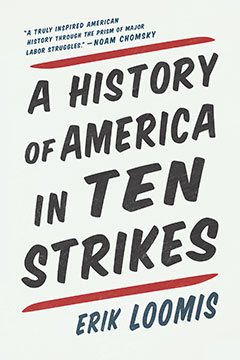
Booknotes: A History of America in Ten Strikes by Erik Loomis

Finished 8/16/20

A rich but readable account of American labor history that is refreshingly honest about both its successes and its challenges.

Eric Loomis is a professor of history at the University of Rhode Island, but is perhaps more well known as a History blogger at Lawyers, Guns, and Money, and for his “This Day in Labor History” series. This book is a cogent coalescence of that series, which provides a periodization of American labor history using ten historical strikes to exemplify the state of labor at given historical moments. These are

  • The Lowell textile strikes of the 1830s
  • The strikes of enslaved Africans during the Civil War
  • The Strikes for the Eight Hour Day in the “Gilded Age” of the 1880s and 90s
  • The Anthracite strikes, particularly the Ludlow, Colorado coal strike and massacre at the dawn of the 20th century
  • The “Bread and Roses” strike and the IWW in the 1910s and 20s
  • The Flint sit-down strike of 1937 and the New Deal
  • The Oakland General Strike of 1946 and post-war Unionism
  • The Lordstown strike of 1972
  • The Air Traffic Controller’s Strike of 1981
  • The Justice for Janitors movement of the 1980s and 90s

The book is filled with an astonishing and interesting cast of characters, and Loomis works hard to bring to life the stories of everyday, working people and the struggles they faced. Perhaps because of his blogging, Loomis is a gifted and clear writer, and despite its broad reach, the book is eminently readable, while still being filled with plenty of wild details, and astonishing stories and quotes. Interesting and complicated characters like Sarah Bagley (who organized arguably the first Women’s Union in the US), or the story of the tensions in the Oakland General strike are rich and rewarding. And the book is full of anecdotes and details, such that I suspect even people relatively knowledgeable about American labor history will find something they didn’t know before (I certainly did).

Loomis chooses to focus on the diversity and social tensions that have run through the US labor movement. Loomis is not shy about discussing the ways in which race and ethnicity have structured and organized the forms that labor organization and class consciousness have taken in America. He follows Du Bois in seeing the Civil War as being won due to the labor action of enslaved African-Americans, and he casts a clear eye on the racism of swaths of the labor movement in the 19th and 20th centuries, with rich discussions of the AFL’s failure to organize non-white or marginally White workers in the 19th century, or the violent pushback by White workers and Southern elites when the CIO attempted to organize Black and White workers in the 1940s. There are also clear (though brief) discussions of the role of race in the election of Donald Trump and his courting of the putative “White Working Class” (though I have found other analyses more useful in understanding 2016).

More explicitly than most academic histories, Loomis is clear that he wants the book to serve as a guide for activists and political supporters of working people. He begins the book with a discussion of the recent teacher’s strikes in West Virginia, which were ultimately successful. And his conclusion argues that we “live in a new Gilded Age” of rampant income inequality and exploitation of working people. He sums the book up by arguing what he sees as the main lessons of American labor history. These are that labor wins when it focuses both on organizing and on political persuasion, that a racially diverse labor movement is ultimately stronger than a racially homogenous one, and that successful labor movements recognize the wide range of laboring activities rather than focusing on just a few (re: industrial) forms of work.

The book is a clear and digestible history, and a call to arms to make a more just and equitable society, using the lessons of past attempts to do the same. Well worth the time of anyone who wants to change the world.

by Quentin Lewis

Quentin's Weeknotes 6/6/20-6/12/20

This Week

by Quentin Lewis

Quentin's Weeknotes 5/31/20-6/5/20

This Week:

by Quentin Lewis

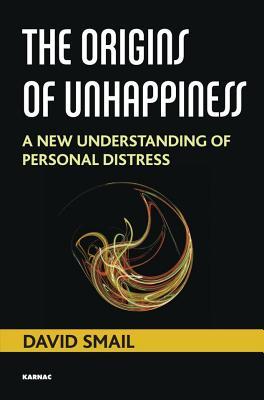
Book Notes: The Origins of Unhappiness by David Smail

Finished May 22, 2020


A complex and critical work that takes psychology and psychotherapy to task for their failure to account for power and its role in producing the phenomena they study and treat.

David Smail was a psychologist, who spent much of his career working in the Mental Health departments of the National Health Service in the UK. This book draws on that experience, as well as his own social and philosophical analysis, to articulate the idea that “emotional distress” (his preferred alternative to the standard descriptor mental disorders) emerges from a tension between an individual and their location within fields of social power, particularly class power. Smail wrote the book in the early 1990s, and saw firsthand the “explosion in the expansion of the therapy and counselling industry in Britain.” (112) He aligns this explosion with the simultaneous expansion of Business culture, or what would later be called flexible or neo-liberal capitalism, and sees the two as linked in their disarticulation of people from forms of community and reconstitution as individuals unmoored from society.

His critiques of therapy are three**-**fold. First, therapy focuses attention on individuals or families and away from broader social or environmental factors that spur distress. It reinscribes social inequality as personal failure, read as psychological or mental instability. Second, the doctor-patient relationship of therapy is limited in how much it can effect such factors, and therefore any positive outcomes are likely related to the establishment of that relationship, and not on the actual causes of distress. Thirdly, because it is routinely a commercial enterprise itself, therapy amounts to a kind of commoditized form of solidarity that is dependent upon one’s class position and relative social power for efficacy. It is likewise easily inserted into other relationships as a mechanism of obscuring or side-stepping power and inequality–Smail mentions ‘redundancy counsellors’ hired by firms in England whose purpose was to provide therapy to fired workers upon their termination, and whose deployment was seen as a humane benefit. Essentially, Smail’s book is an exploration of the socio-psychological experience of the Marxist concept of alienation.

To make this provacative claim, Smail recasts psychology not as the study of constituent parts of human personality, but as a kind of phenomenological study of the relationship of human bodies to their social environments at multiple scales, and the meaning systems “which reflect [people’s] struggles to represent and talk about what it is like to be a body in a world.” (230) This profoundly materialist analysis requires an understanding of power as it operates on people, and as they make sense of those operations. He sees emotional distress in a person as a response to an inability to access or even comprehend the action of power on their body, particularly power operating at a distance.  

Smail argues that instead of a personalized, commoditized vision of therapy to treat emotional distress, we should instead invest in solidarity–the recognition of our shared experience as bodies in the world that can experience pain and distress. He argues that a relationship of mutual care, in which the impacts of social power are not just recognized but actively confronted, is a better basis for handling such distress than an anemic, individualizing therapy that focuses only on a persons interior life.

As a case study, he uses the 1980s and several patients that he worked with, encountered, or treated during this time of neoliberal upheaval and the implemention of Margaret Thatcher’s famous dictum that there is no such thing as society, only individual and families. He draws on the sociology and economics of the period to contextualize the 1980s as a time in which understandings of the relationship of individuals to their power horizons were being reconfigured towards exalting business. This had profound consequences for the meanings that people made of their own lives, and therefore their feeling of personal wellbeing, and Smail explores the impact of these changes on several pseudonymous people.

I found this book fascinating, and I also recognized that there are others better suited to evaluate its provacative claims than I. For one thing, the line between emotional distress and psychosis (particularly complex psycho-phenomena like schizophrenia, bipolar disorder, post-traumatic stress disorder, etc…) is not well-defined and Smail doesn’t spend a lot of time thinking through the implications of compartmentalizing such phenomena as “emotional distress.” I find it hard to believe that 100+ years of psychological diagnosis and its long-term work identifying and describing conditions of psychotic or neurotic behavior has simply been an exercise in self-perpetuation (which he suggests in numerous places). At the same time, it is true the psychology has frequently pathologized aspects of human behavior in ways that are now seen as harmful.In any case, Smail is writing a synthetic polemic, and as such, may have smoothed over complexity in ways that might deserve further scrutiny later, or by someone else.

All in all, The Origins of Unhappiness is a complex, deeply humanistic work that sets out an ethical vision of our treatment of each other that, while perhaps a bit unnuanced, is forthright, deeply considered, and politically righteous.


by Quentin Lewis

Quentin's Weeknotes 5/16/20-5/22/20

This Week:

  • I did some work figuring out how to potentially move the First Year Seminar that I co-teach on-line. It’s called “Collectors and Collecting” and it’s about material objects and their complicated meanings in our world. I’m not entirely sure how to effectively run a seminar-style class on-line, but am putting in some time now, to get ready.
by Quentin Lewis

Quentin's Weeknotes 05/8/20-5/15/20

This Week:

  • I finished reading “Gods, Monsters, and the Lucky Peach” by Kelly Robson. It was a strange and delightful novel about rebuilding after apocalypse, time travel, transhumanism, and the tensions of tradition and change.
  • I finished teaching MUST204: Collections Management at Hartwick College. The class, which is a practical, hands-on exploration of museum collections management, was particularly dereailed by COVID-19, but we fumbled our way through, and the students put together an excellent collections procedures manual that we will use in the Museum moving forward.
  • I started brainstorming some on-line and hybrid on-line/museum programs that the Yager Museum can do as we slowly, safely re-open Hartwick College.
by Quentin Lewis

Quentin's Weeknotes 5/2/20-5/8/20

This week:

by Quentin Lewis

Book Notes: The Cabin at the End of the World by Paul Tremblay

The Cabin at the End of the World

by Paul Tremblay

Finished 4/26/20

Riveting, devastating, and thoughtful.

The plot is fairly straightforward. A gay couple with an adopted daughter is taking a vacation in a remote cabin in New Hampshire. They are visited by four individuals who, after breaking into the cabin and taking them hostage, tell them that they have to choose one of them to kill or the world will end.

After reading this, I’m fairly convinced that Paul Tremblay has been working his way through horror and thriller tropes, blasting them into another dimension with every approach. “A Head full of Ghosts” was a demonic possession story in an age of reality television and economic crisis. “Disappearance at Devil’s Rock” was a child abduction tale, jury-rigged and unstable due to the unreliability of memory, relationship, and history. Now with “Cabin at the End of the World” Tremblay has taken the home-invasion sub-genre and transformed it into a story about faith, politics, mass-media and ecological disaster.

I have consistently appreciated Tremblay’s insistence on ambiguity and uncertainty as key modes of good horror. Folks looking for a Scooby-doo mask removal at the end should steer clear, as the novel leaves some of its central narrative questions unanswered, in favor of a focus on the characters and the resolution of their relationships to one another. To me, it’s a far more rich and engaging way of writing horror.

As usual, Tremblay is interested in how media and mass culture intersect with personal tragedy and terror. A central plank of the story hangs on the simultaneous repetition and manufactured shock and doom of 24 hours news channels, and the degree to which they tell us anything significant about the world of which we weren’t already aware. There’s actually some fairly deep rumination here about the relationship between media narrative and prophecy, and the ways in which our minds can organize the same information in ways that alternative mundane or profoundly significant.

It’s not like it’s a particularly lonesome or brave opinion, but I think Paul Tremblay is one of the most sophisticated, smart, and engaging writers of horror currently working. “Cabin at the End of the World” is masterfully paced, plays with every tired expectation, and delivers a thoughtful commentary on contemporary mass culture. Brilliant.